LAUTENWERK AND HARPSICHORD HOME PAGE
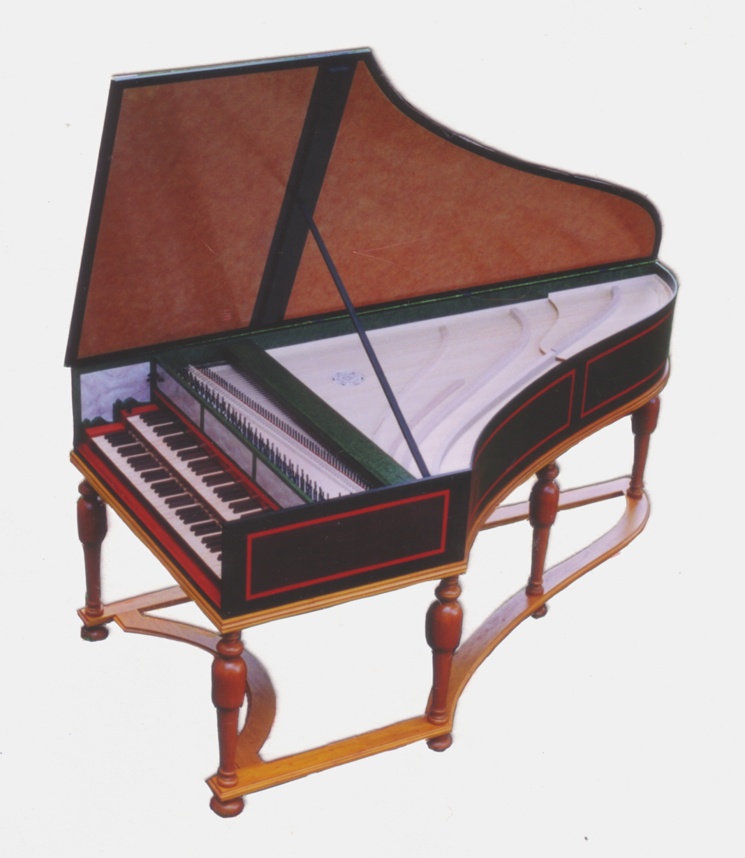
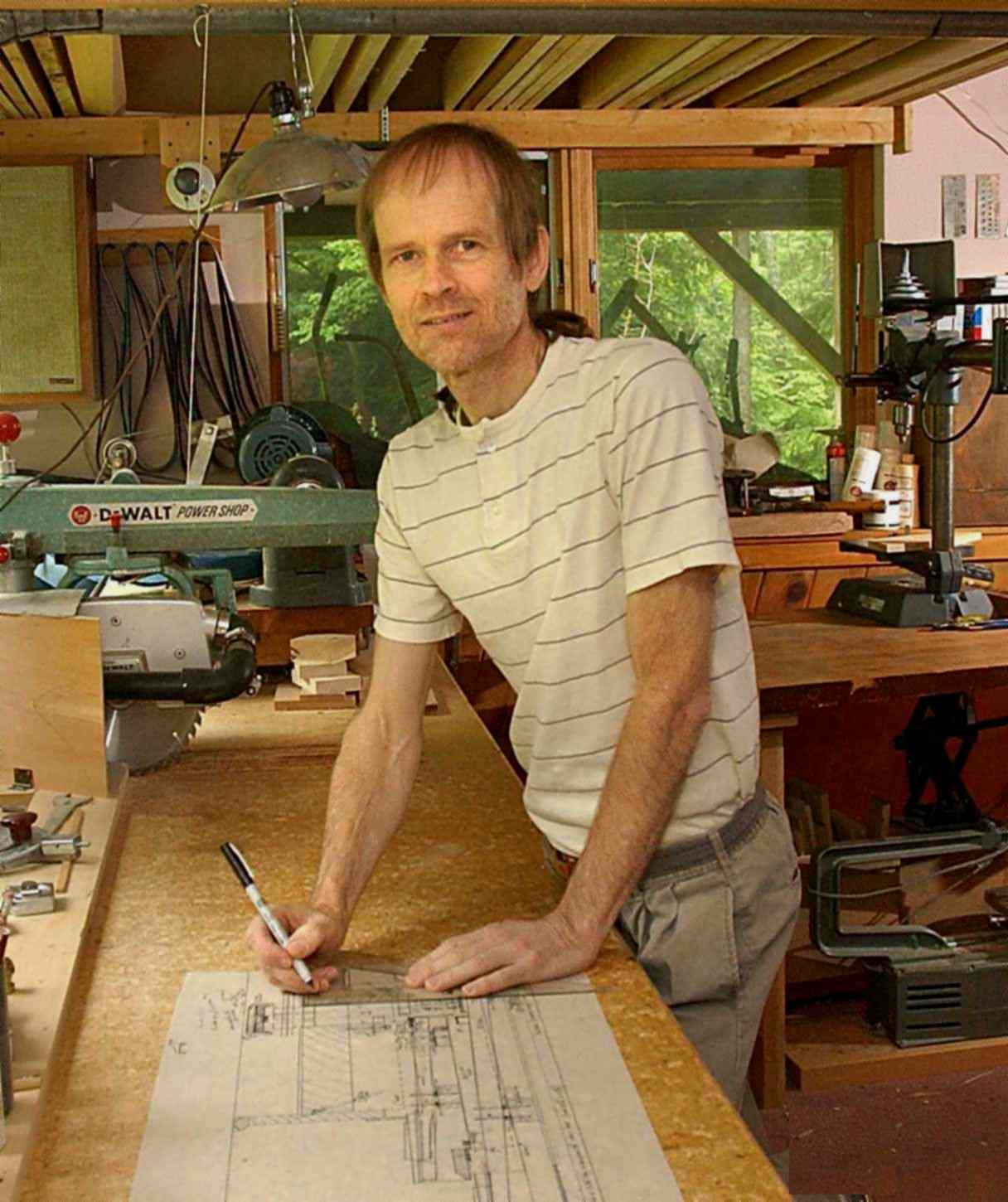
Steven Sorli began his harpsichord making career in 1971 as an apprentice of the famous Boston harpsichord maker, Frank Hubbard. He quickly became skilled in all facets of the craft and was especially gifted in the art of decoration. Steven set up his own workshop to design, make and adorn harpsichords individually from scratch. His construction process relies on intuition and ingenuity to ensure a serviceable and singular work of art. The sound qualities achieved by Mr. Sorli are often described as having a distinctive antique tone. Innate artistic abilities contribute to a tasteful blend of color and form that add a complimentary balance to the tonal shades. In 1982 he was awarded a craftsman's fellowship grant from the National Endowment for the Arts. Over 97 instruments have left his workshop and are scattered throughout the United States and abroad.
At the turn of the century, Mr. Sorli began designing many models of the lute-harpsichord or lautenwerk. This type of instrument was originally fitted with gut strings and sounds very much like a lute or nylon-strung guitar. The response to this revival of the lautenwerck has been quite positive.
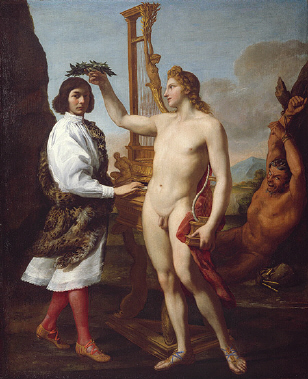
"Marcantonio Pasqualini Crowned by Apollo"
Mr. Sorli is the first harpsichord maker to resurrect the keyed lyre or clavicytherium with an open lyre. This upright instrument is inspired by the oil painting "Marcantonio Pasqualini Crowned by Apollo" by Andrea Sacchi (1641). It has one choir of 8' gut or synthetic gut strings with a range ofGG-d3. The total height is 81" and takes up only a 37" by 18" floor space. The sound from the small soundboard just above the keyboard was frequently described as "magical" at the Boston Early Music Festival. The sound has a sweet, hollow, vocal quality that radiates out from both sides of the soundboard when the back lid is open. This instrument resembles a lute and harp in sound and is amazingly versatile. Recent owners of the Sorli clavicytherium are Peter Sykes, Sopranos Julianne Baird and Molly Netter, Mark Shuldiner, Margaret Irwin-Brandon, the Conservatoire de Musique de Geneve and Cristina Banegas of Uruguay. Listen this unique sound in the "Sound Samples" page.
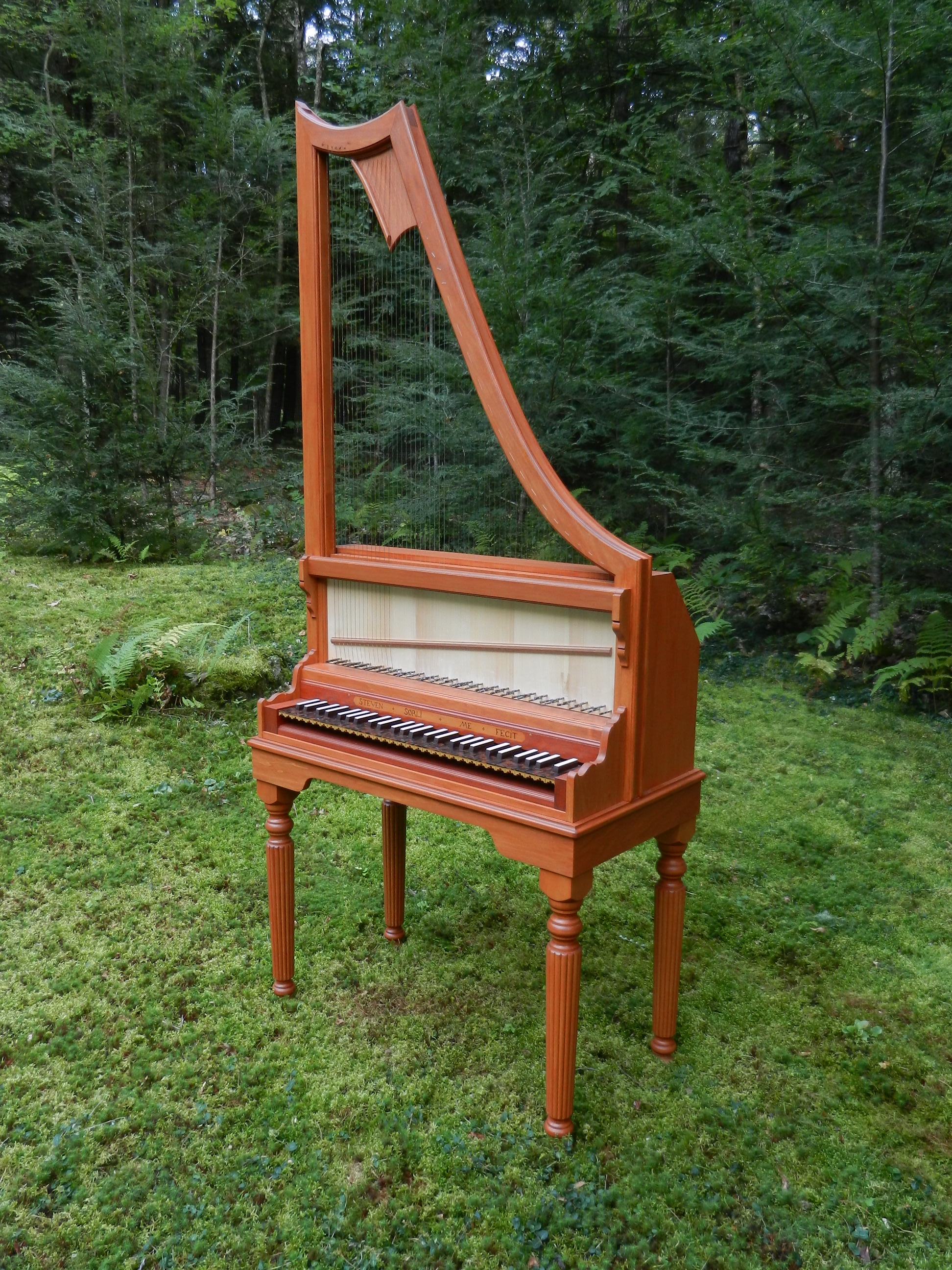
Gut-Strung Clavicytherium
Non-vertical versions of the clavicytherium have been designed since 2020. The latest, now available in 2026, is a table-top lautenwerk with two sets of strings and only one set of jacks to play both choirs. It is possible to play one 8' choir or both together. The second choir is a simple chorus stop with 4' strings from C to g (20 notes) with the remaining at 8' pitch. The string length and plucking point of each pair is identical. The double pluck adds a rich sparkle to the sound, quite different from the traditional set up with two ranks of jacks. Two ottavino models are also available with the same action design.
Watch video demo of one choir and two choirs compared
The standard decor includes brown mallee key tops with carved key fronts, stainded and varnished case, intricate parchment rose and elegantly turned legs. All finishes are made from natural plant oils and resins.
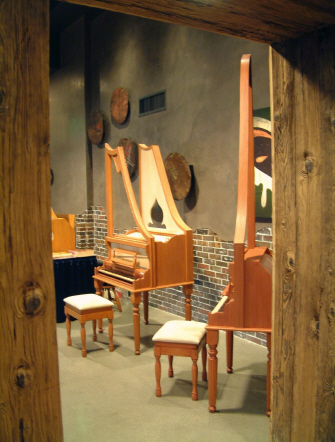
Clavicytheria at the Boston Early Music Festival 2013
ssorli@gmail.com